Have you ever heard someone call another person a “Luddite” just because they don’t like new technology? It’s a term that gets thrown around quite a bitbut its meaning is often misunderstood. In this article, we’ll break down the true meaning of “Luddite,” explore its origins, and explain how it’s used in today’s world. #luddite meaning
What Does “Luddite” Mean?
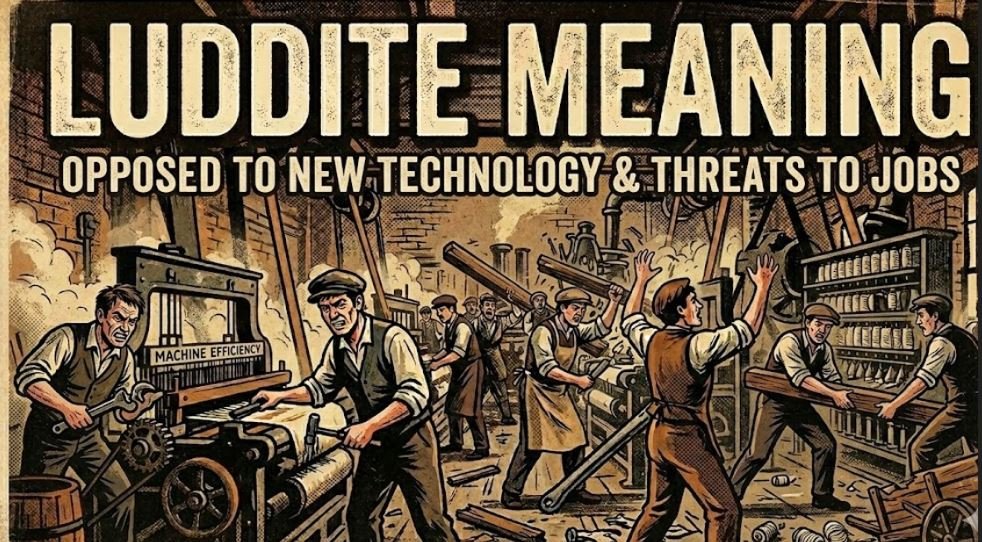
At its core, a Luddite is someone who is opposed to new technologies or ways of working, especially when they feel those changes could threaten jobs or traditional skills.
Today, the term is often used informally to describe someone who avoids modern gadgets like smartphones, computers, or social media. For example, if someone refuses to use online banking or struggles with new apps, they might jokingly be called a Luddite.
But the real meaning goes deeper than simply “not liking technology.”
The Origin of the Term “Luddite”
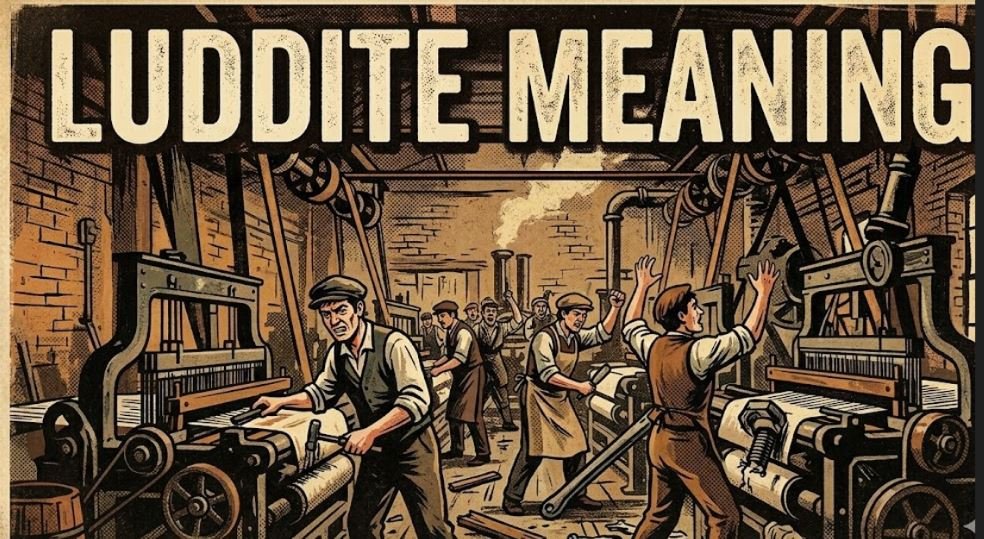
The word “Luddite” comes from a group of English workers in the early 19th century. These workers, mainly textile artisans, protested against the rise of industrial machines during the Industrial Revolution.
Who Were the Original Luddites?
The original Luddites were skilled workers who feared that machines would replace their jobs and reduce the quality of their work. Around 1811 to 1816, they began destroying machinery in factories as a form of protest.
The movement is said to be named after a figure called Ned Ludd, who may or may not have been a real person. According to legend, he smashed a machine in anger, inspiring others to do the same.
Why Did the Luddites Oppose Technology?
Contrary to popular belief, the Luddites were not simply “anti-technology.” Their concerns were more practical and economic.
Key Reasons Behind Their Resistance:
- Job Loss: Machines replaced skilled laborers, leaving many unemployed
- Lower Wages: Factory owners could hire cheaper, less-skilled workers
- Loss of Craftsmanship: Traditional skills were devalued
- Poor Working Conditions: Industrialization often led to harsh labor environments
So, the Luddites weren’t against progress itself they were against how it was being used to harm workers.
Modern Usage of the Word “Luddite”
Today, the term “Luddite” is mostly used in a casual or humorous way.
Common Modern Meanings:
- Someone who avoids using new technology
- A person who prefers traditional methods over modern ones
- Someone who struggles to adapt to digital tools
For example:
- “My dad is such a Luddite he still uses a flip phone!”
- “I feel like a Luddite because I don’t understand this new software.”
However, the modern use can sometimes overlook the deeper historical meaning tied to workers’ rights and economic concerns.
Is Being a Luddite a Bad Thing?
Not necessarily! While the term is sometimes used negatively, being cautious about new technology can actually be a good thing.
When “Luddite” Can Be Positive:
- You value privacy and avoid intrusive technologies
- You question how technology impacts jobs or society
- You prefer simpler, more mindful ways of living
In fact, many people today are rethinking their relationship with technology limiting screen time, avoiding social media, or choosing analog alternatives. In this sense, a “modern Luddite” might just be someone seeking balance.
Luddite vs. Technophobe: What’s the Difference?
It’s easy to confuse a Luddite with a technophobe, but they’re not exactly the same.
- Luddite: Opposes certain technologies, often for social or economic reasons
- Technophobe: Has a fear or anxiety about using technology
A Luddite might understand technology but still choose to reject it. A technophobe, on the other hand, may avoid it due to discomfort or fear.
Why the Term Still Matters Today
Even in today’s fast-paced digital world, the idea behind the word “Luddite” is still relevant.
With the rise of automation, artificial intelligence, and digital transformation, many workers worry about job security just like the original Luddites did.
Questions like these continue to shape modern discussions:
- Will machines replace human jobs?
- How can we protect workers in a tech-driven world?
- Is all technological progress truly beneficial?
Understanding the true meaning of “Luddite” helps us have more thoughtful conversations about these issues.
Conclusion
The word “Luddite” is more than just a label for someone who dislikes technology. It has deep historical roots tied to workers’ rights, economic change, and social impact.
While it’s often used humorously today, its original meaning reminds us that questioning technology isn’t always a bad thing. Sometimes, it’s necessary.
So next time you hear someone called a Luddite, remember there’s a lot more to the story than meets the eye.
FAQs About Luddite Meaning
1. What is a simple definition of Luddite?
A Luddite is someone who resists or avoids new technology, often because they prefer traditional methods or are concerned about its impact.
2. Were Luddites against all technology?
No, the original Luddites were not technology. They opposed machines that threatened their jobs and livelihoods.
3. Is “Luddite” an insult?
It can be, depending on how it’s used. Sometimes it’s playful, but it can also imply that someone is outdated or resistant to change.
4. Are there modern-day Luddites?
Yes, many people today question or limit their use of technology for personal, social, or ethical reasons.
5. What is the difference between a Luddite and a technophobe?
A Luddite chooses to reject certain technologies, while a technophobe fears or feels anxious about using them.
Leave a Reply