
Introduction
Have you ever seen clouds swelling in the sky or smoke rising in thick, rolling waves? If yes, then you’ve already witnessed something that perfectly describes the word “billow.” It’s a simple yet expressive word often used in everyday English to describe movement that looks soft, flowing, and full. #Billow Meaning
In this guide, you’ll learn the meaning of billow, how to use it in sentences, its synonyms, and an easy explanation that anyone can understand.
Table of Contents
What Does “Billow” Mean?
Billow (verb & noun) refers to something that swells, rises, or moves in large, flowing waves.
Simple Definition:
a. To expand and move outward in a smooth, rolling way
b. Often used for things like clouds, smoke, fabric, or waves

Easy Explanation:
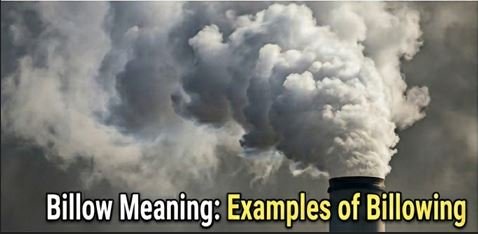
Think of a big curtain blowing in the wind or thick smoke rising from a fire that soft, rolling motion is called billowing.
Billow as a Verb
When used as a verb, billow describes the action of moving or swelling outward.
Examples:
a. The smoke began to billow from the chimney.
b. Her dress billowed in the wind as she walked along the beach.
c. Dark clouds billowed across the sky before the storm.
Billow as a Noun
As a noun, billow refers to a large wave or a swelling mass.
Examples:
a. The ship disappeared behind a giant billow of water.
b. A billow of smoke covered the entire street.
Common Situations Where “Billow” is Used
The word billow is often used in descriptive writing. Here are some common contexts:
1. Nature
a. Clouds billowing in the sky
b. Ocean waves rising and falling
2. Fire and Smoke
a. Smoke billowing from a fire
b. Dust billowing in dry weather
3. Clothing and Fabric
a. Curtains billowing in the breeze
b. Dresses flowing in the wind
Synonyms of Billow
Here are some similar words you can use instead of billow:
Swell – to grow larger or expand
Surge – to move suddenly and powerfully
Roll – to move in waves
Balloon – to puff out like a balloon
Heave – to rise and fall
Example Comparison:
The smoke billowed into the air.
The smoke rolled into the air.
Both sentences are similar, but billowed sounds more vivid and descriptive.
Opposites (Antonyms) of Billow
To understand a word better, it helps to know its opposite:
Sink – to go downward
Shrink – to become smaller
Collapse – to fall inward
How to Use “Billow” Correctly
Here are some simple tips to help you use billow naturally:
Use it for soft, flowing movement, not sharp or sudden motion
It often describes large and visible movement
Works well in descriptive or creative sentences
Correct Usage:
The flag billowed in the wind. (correct)
The rock billowed down the hill. (Incorrect rocks don’t flow)
Why “Billow” is a Powerful Word
Billow is commonly used in storytelling and descriptive writing because it creates a strong visual image. Instead of saying “the smoke rose,” saying “the smoke billowed” makes the scene feel more alive and dramatic.

Conclusion
The word billow is a beautiful and expressive term used to describe something that moves in a smooth, rolling, and expanding way. Whether it’s clouds in the sky, waves in the ocean, or fabric in the wind, billow helps paint a vivid picture in the reader’s mind.
By understanding its meaning, examples, and synonyms, you can start using this word confidently in both speaking and writing.
FAQs About “Billow”
1. What does “billow” mean in simple words?
It means something that moves or swells in soft, rolling waves, like clouds or smoke.
2. Is “billow” a verb or a noun?
It can be both. As a verb, it describes action. As a noun, it refers to a wave or swelling mass.
3. Can “billow” be used for clothes?
Yes For example: Her dress billowed in the wind.
4. What is a synonym for “billow”?
Some common synonyms include swell, surge, roll, and balloon.
5. Is “billow” a positive or negative word?
It’s generally neutral, but it can feel dramatic depending on the context (like smoke from a fire).
Leave a Reply