Have you ever read an old text or historical story and come across the word “cubit”? It might sound unfamiliar today, but it was once one of the most commonly used units of measurement in the ancient world.
In this article, we’ll explore the meaning of “cubit,” where it comes from, how it was used, and why it still appears in modern discussions.
What Does “Cubit” Mean?
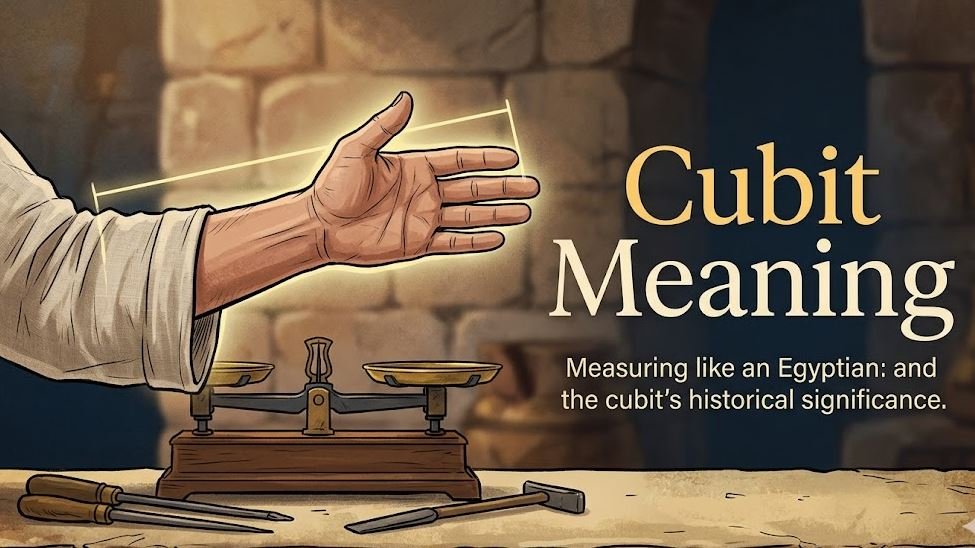
A cubit is an ancient unit of length based on the distance from the elbow to the tip of the middle finger.
In simple terms, it’s a natural measurement taken from the human body making it easy to use before rulers or measuring tools were widely available.
On average, a cubit is about 18 inches (45 centimeters), although the exact length could vary depending on the person or culture.
The Origin of the Cubit
The word “cubit” comes from the Latin word cubitum, meaning “elbow.” This makes sense, as the measurement is directly related to the arm.
Cubit measurements were used thousands of years ago in ancient civilizations, including:
- Ancient Egypt
- Mesopotamia
- Israel
- Greece and Rome
Each culture had its own version of the cubit, which sometimes led to slight differences in length.
Types of Cubits
Not all cubits were exactly the same. Over time, different standardized versions developed.
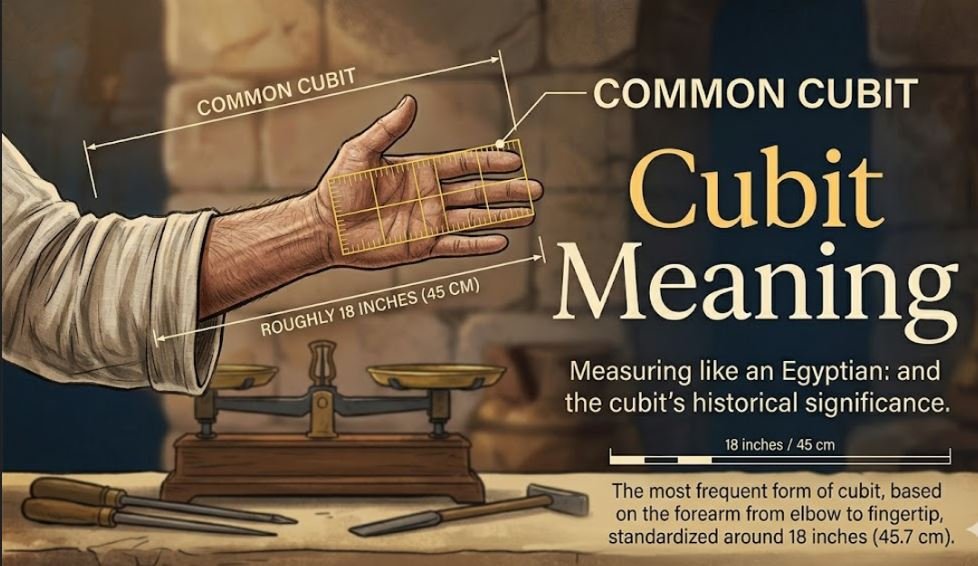
1. Common Cubit
- Based on the average forearm length
- Roughly 18 inches (45 cm)
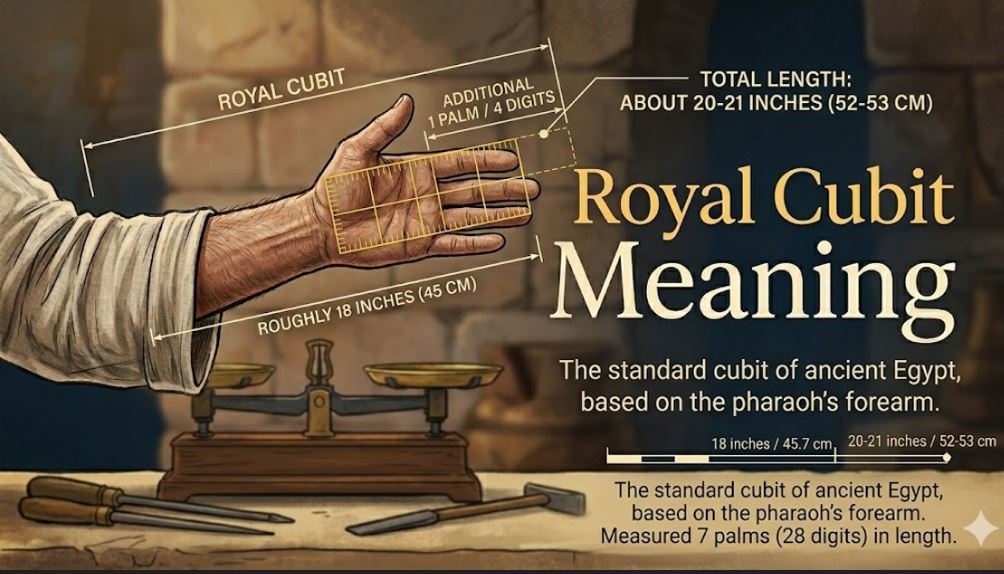
2. Royal Cubit
- Used in ancient Egypt for construction and architecture
- Slightly longer, about 20–21 inches (52–53 cm)
- More precise and often measured using official rods
The royal cubit helped ensure consistency in large building projects like temples and pyramids.
How Was the Cubit Used?
The cubit was widely used in everyday life and major construction projects.
Common Uses Included:
- Measuring land and buildings
- Designing temples and monuments
- Creating furniture and tools
- Recording dimensions in historical and religious texts
Because it was based on the human body, it was practical and accessible anyone could estimate a cubit without special tools.
Cubit in Religious and Historical Texts
The cubit is frequently mentioned in ancient writings, especially in religious texts like the Bible.
For example, the dimensions of Noah’s Ark and Solomon’s Temple are described using cubits. This has led historians and scholars to study cubit measurements to better understand these structures.
However, because cubit lengths varied, interpreting these measurements can sometimes be challenging.
Why Isn’t the Cubit Used Today?
With the development of standardized measurement systems like the metric system and imperial units, the cubit gradually fell out of use.
Reasons for Its Decline:
- Lack of consistency between individuals and cultures
- Need for precise measurements in science and engineering
- Introduction of standardized tools like rulers and measuring tapes
Today, units like meters, centimeters, feet, and inches are far more accurate and widely accepted.
Why the Cubit Still Matters
Even though we don’t use cubits in everyday life anymore, they still hold importance in certain areas.
Modern Relevance:
- History and archaeology: Helps us understand ancient structures
- Religious studies: Important for interpreting sacred texts
- Education: A great example of how measurement systems evolved
The cubit also reminds us of a time when humans relied on their own bodies as tools a simple yet effective approach.
Fun Fact About the Cubit
Did you know that some ancient Egyptians used specially marked rods to measure the royal cubit? These rods were carefully crafted and used by builders to ensure accuracy in construction.
Conclusion
The cubit may be an ancient unit of measurement, but its impact is still felt today. From building pyramids to describing legendary structures, it played a key role in shaping early human civilization.
Understanding the meaning of “cubit” not only helps you read historical texts more clearly but also gives you a glimpse into how people once measured and understood the world around them.
FAQs About Cubit Meaning
1. What is a cubit in simple terms?
A cubit is an ancient unit of length based on the distance from the elbow to the tip of the middle finger.
2. How long is one cubit?
It is typically about 18 inches (45 cm), but it could vary depending on the culture.
3. What is the difference between a common cubit and a royal cubit?
A common cubit is shorter and less precise, while a royal cubit is longer and standardized for official use.
4. Is the cubit still used today?
No, it has been replaced by modern measurement systems, but it is still studied in history and religion.
5. Why was the cubit important?
It was easy to use, widely understood, and essential for construction and daily life in ancient times.
Leave a Reply